
How do you prove the efficacy of UV disinfection? We brought in a third party to find out.
With over a century of use as a disinfectant, there is a plethora of scientific studies validating the effectiveness of UV light to eliminate harmful bacteria. Due in part to this established high level of UV disinfection efficacy, many companies have jumped onboard and created UV products. And while organizations are free to make all sorts of claims about how they’ve harnessed the power of UV to its fullest potential, it’s only through third-party testing that all biases can be removed and consumers can trust that the information being presented is legitimate.
As part of Ohmnilab’s commitment to transparency and accountability, we wanted to test OhmniClean with an impartial, external company and see what the results indicated.
Third-Party Testing of UV Disinfection Efficacy
To do this, we sent our OhmniClean robot to EMSL Analytical, Inc. — one of the nation’s leading environmental testing firms that’s been providing analytical services since 1981. EMSL stated that the objective of their OhmniClean testing was, “To determine the anbacterial efficacy of a UV device against MRSA, VRE, P.aeruginosa, E.coli and C.difficile endospores (unsoiled) after UV exposure at 3 different me points and three distances away from the device.”
Their method for testing the efficacy of UV disinfection, as indicated in the objective, involved exposing the sample bacteria to OhmniClean’s UV light from various distances (1 ft, 3 ft, and 5 ft), as well as for different durations of time (3 mins, 5 mins, and 10 mins). They measured the amount of bacteria present before exposure and again after the UV light was administered.
Test Results
Upon completion of the UV disinfection efficacy test, the results indicated that the dose of UV light delivered by OhmniClean was robust, strong, and effective, regardless of the distance from or the amount of time for which it was administered. Of particular note, there was a greater than log6 reduction in E. coli, MRSA, VRE, and P. aeruginosa, and over a 99% kill rate for all pathogens.
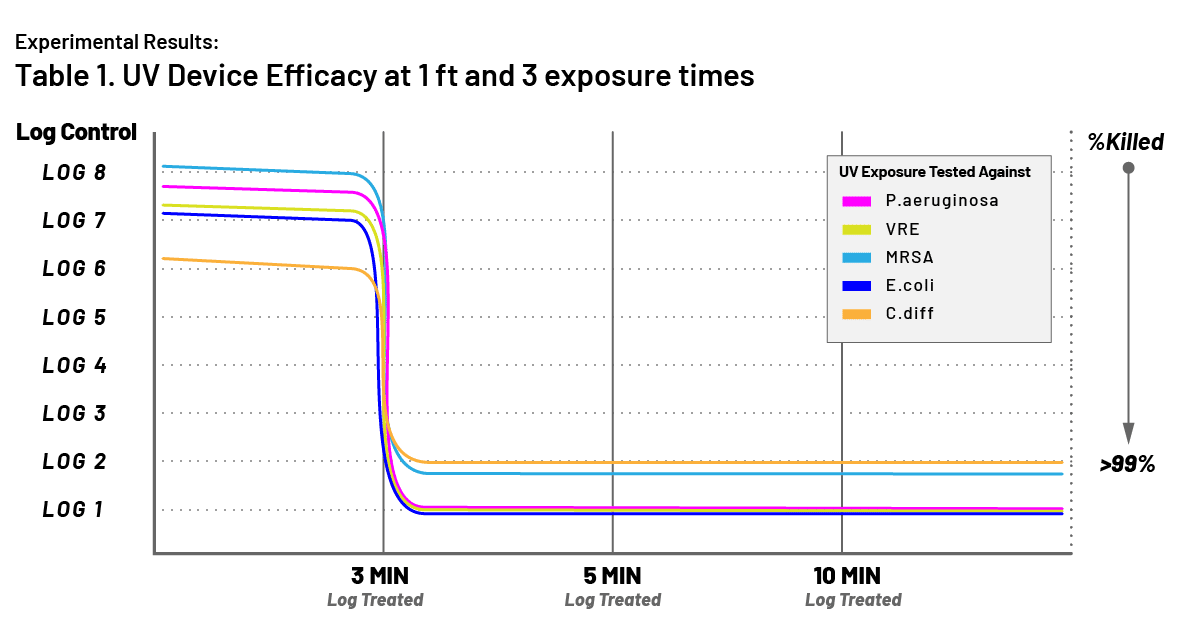
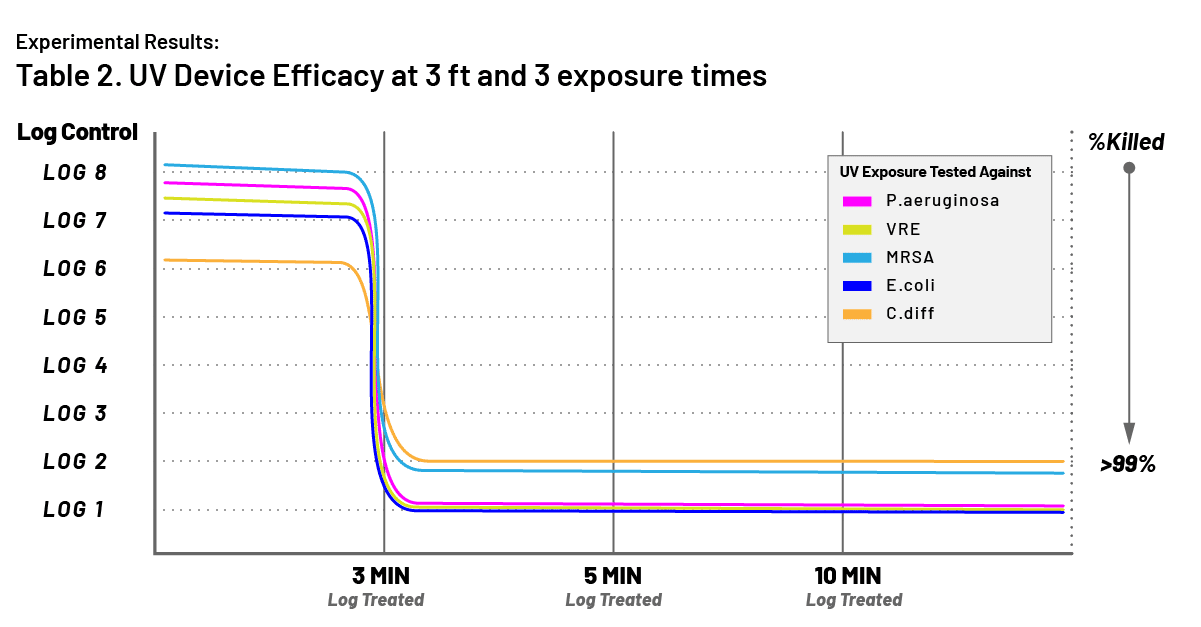
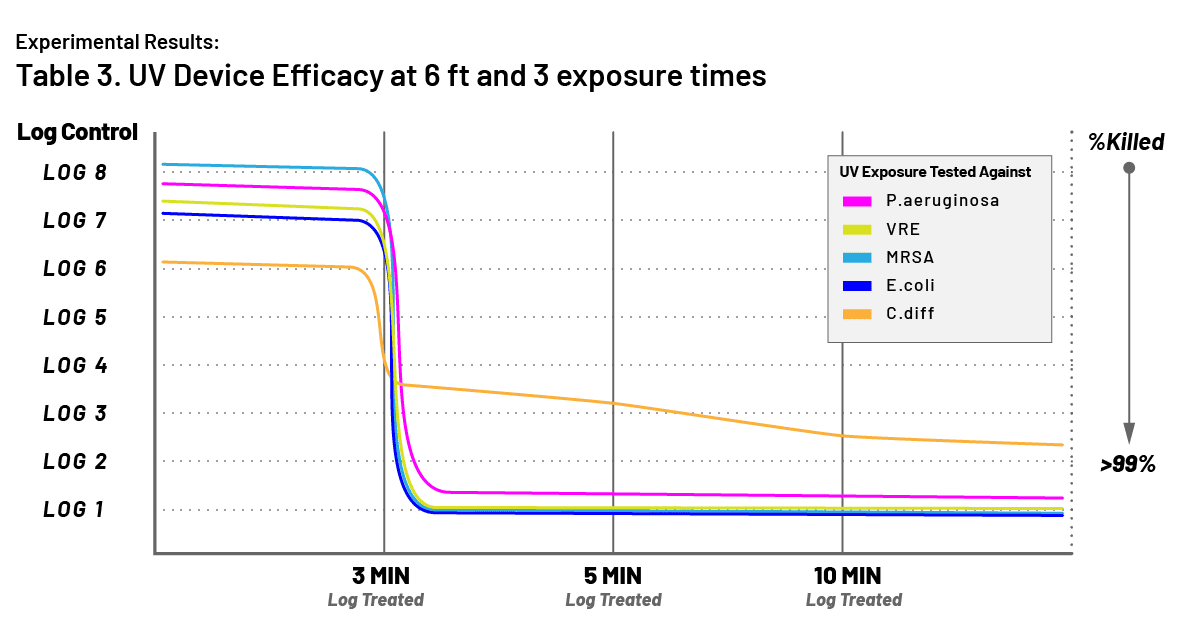
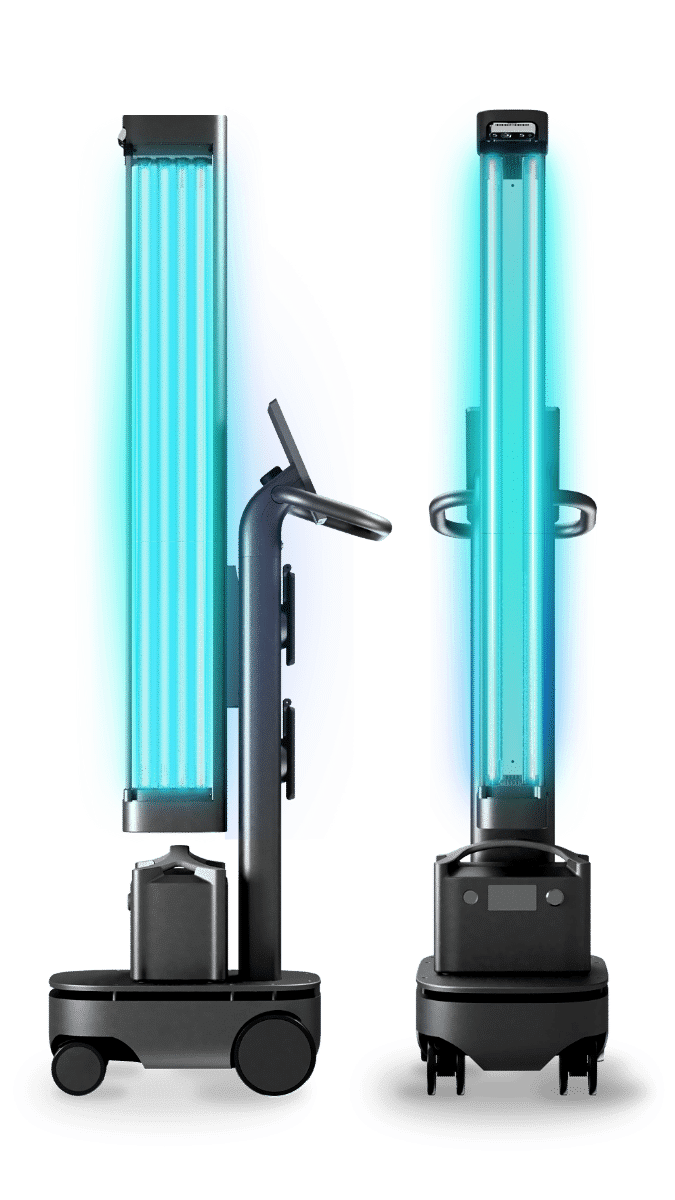
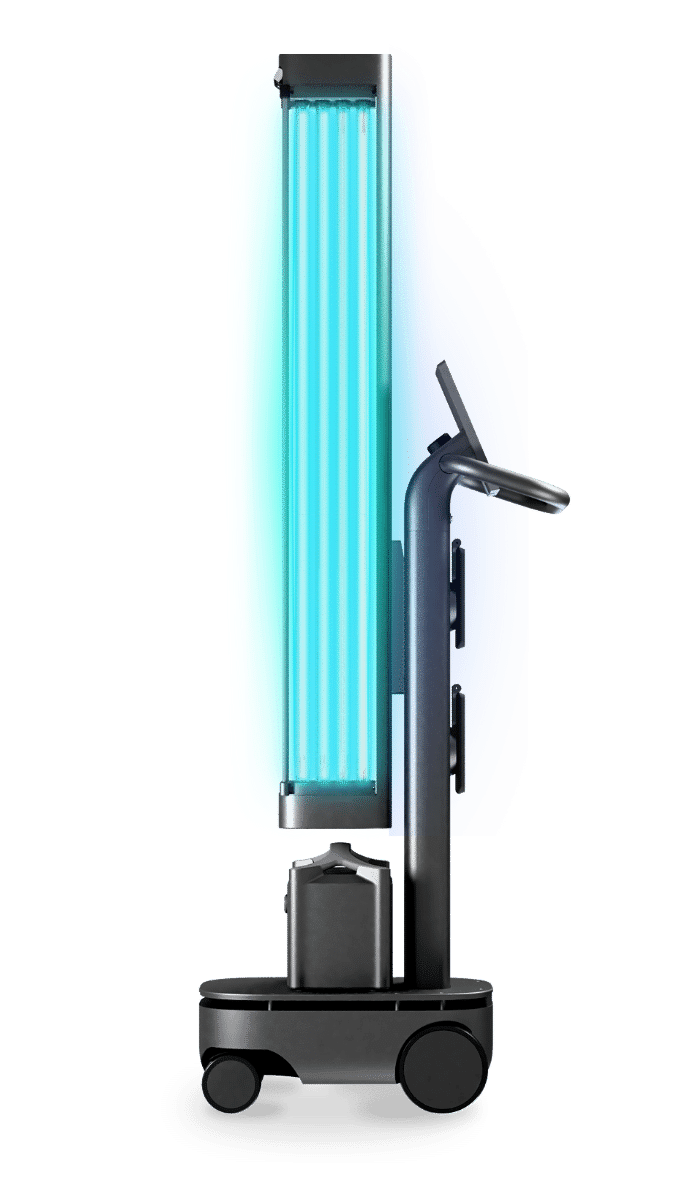
While these third-party results are impressive and demonstrate OhmniClean as a powerful tool for UV disinfection, it only tells part of the story. Our UV-C robot is packed with other features that make it the ultimate defense against harmful pathogens. Most prominently, its fully autonomous capabilities mean that the robot drives itself up to each surface, delivering this proven-potent dose of UV light equally across an entire room, no matter how large or small.
If you’re interested in seeing more of the raw data and results of UV disinfection efficacy test, you can read EMSL’s full report here.